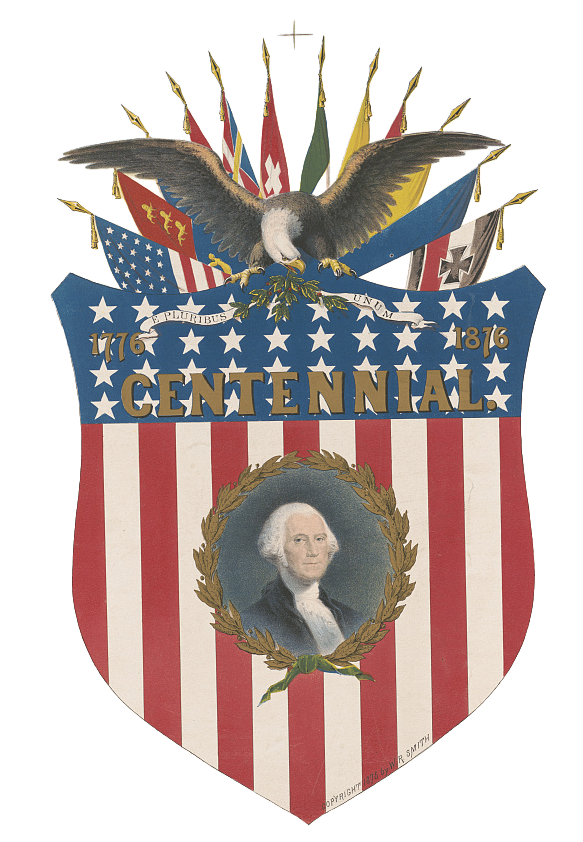
Welcome to a visual exploration of the symbols that define the United States of America.
While our country’s written documents, the Declaration of Independence, Constitution, and Bill of Rights, define the political philosophy of our nation, visual and auditory symbols shape citizens’ understandings of what it means to be an American. The bald eagle, Great Seal and motto, White House, flag, and national anthem all had their origins in the early national period, used to unify the populace around shared values and aspirations of liberty and unity.
Significant anniversaries of our nation’s founding thrust American symbols into the forefront of our collective consciousness. In 1876, the country celebrated its 100th birthday with commemorative banners and flags featuring American icons. The Liberty Bell and American flag were featured prominently in celebrations of the nation’s sesquicentennial in 1926. As the United State's role in the world expanded in the early twentieth century, the Statue of Liberty welcomed newcomers and visitors, while Uncle Sam stood in for the country in artwork and political commentary at home and abroad. Throughout the following century, Americans internalized values of patriotism, unity, tenacity, and thrift by reciting the Pledge of Allegiance, singing the national anthem, and purchasing savings bonds. Each year, Independence Day celebrations featured patriotic music, fireworks, and parades, full of symbols that transformed historical events into enduring messages about democracy.
American symbols represent our history, and they encourage us to aspire to our country’s ideals. They remind us that our democracy is a work in progress and that our history binds us together.
As you explore 250 years of American symbols, ask yourself: What does America mean to you?